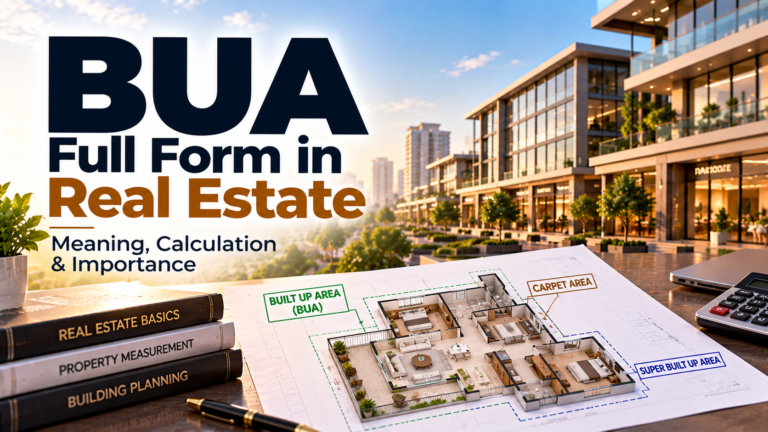
Understanding the space you are buying is an important part of the property buying process. When you take a look at property listings or brochures, you can come across words like BUA, carpet area and super built-up area. A normal person can mistake all of these to be the same, but they are not.
BUA full form in real estate is Built Up Area. It is the total floor space including the outer walls, usable interior space, wall thickness and balconies etc. If you are an owner you should know about all the terms so you can compare flats and know about the actual usable space.
In this blog, we will know about BUA full form in real estate, how it is calculated, and why it matters in real estate. We will also cover the difference between Carpet Area, Super Built-Up Area and Built-Up Area.
What Is the Built Up Area of a Flat?
Built-up area is the total surface of a flat, including the carpet area, the wall space and any other included spaces like balconies depending on the layout of your flat. In other words, it is the total space covered by your flat, including the walls and some extra spaces.
For example, if the carpet area of the flat is 800 sq. ft., if the wall space is 100 sq. ft. and the balcony area is 50 sq. ft., then there will be 950 sq. ft. of built-up area.
The built-up area is larger than the carpet area of a flat in that it contains more than just the floor space of your home. But, it is smaller than the super built-up area that may also include a portion of the common spaces like lifts, staircases, and lobbies.
An advantage of knowing the Built-up area of the building is that it allows you to assess the size of the property and compare other properties.
Importance of BUA When Buying a Property
When you are buying a flat, understanding the BUA will help you get an idea of how big the property is, i.e. how much wall and other space is covered. It will help you to compare flats and understand their prices. Here are some reasons why BUA is important.
1. Understand the Actual Space
BUA is the area of carpet, walls, and other included areas. A bigger BUA does not always mean a bigger usable space inside your flat. Checking the flat carpet area along with BUA allows you to know how much space you can use.
2. Helps You Understand Property Pricing
Developers may quote property prices based on different measurements of the area. Knowing the Built-Up area meaning will help you understand exactly what you are paying for. It will also help you to compare prices between flats and avoid confusion when checking property costs.
3. Helps Estimate Additional Costs
Costs, such as upkeep and renovation costs, may vary depending on the property’s size or specific project rules. Understanding BUA can help you to ask the right questions and plan your budget before finalising a flat.
4. Makes Property Comparison Easier
It’s important not to measure the BUA of a flat only. Checking both the BUA and carpet area of the flat will help you evaluate the usable space, understanding the difference in size and being able to make an informed decision on which flat to purchase.
How to Calculate BUA in Real Estate?
BUA full form in real estate is Built-Up Area. It’s calculated by adding the carpet area, wall thickness, and exclusive balcony or utility areas, wherever applicable.
Formula: Built-Up Area = Carpet Area + Wall Area + Balcony + Exclusive Utility Areas.
For example, 700 sq. ft. carpet area + 100 sq. ft. additional areas = 800 sq. ft. BUA.
Carpet Area Vs Super Built-Up Area Vs Built-Up Area
In a flat purchase, you might hear terms such as carpet area, built-up area, and super built-up area. These three terms are all related to the size of a property but they have different meanings. Here is a table explaining the difference between Built-Up area vs Super Built-Up area vs carpet area.
| Pointer | Carpet Area | Built-Up Area (BUA) | Super Built-Up Area |
| Meaning | Actual usable floor space inside the flat. | Carpet area plus walls and other included areas. | Built-up area plus a share of common areas. |
| Includes | Usable rooms, kitchen, bathrooms, and internal space. | Carpet area, walls, and included balconies. | Built-up area, lifts, lobbies, staircases, and other common areas, as applicable. |
| Usable Space | Shows the usable space inside the flat. | Includes usable and structural areas. | Includes the flat area and a share of common spaces. |
| Size | Usually the smallest. | Larger than the carpet area. | Usually the largest. |
| Purpose | Helps buyers understand actual usable space. | Helps understand the total covered area of the flat. | Often used by developers for property pricing. |
How to Check BUA in Property Documents
Before you buy a flat you must check the BUA full form in real estate that is in the property documents. This will help you know about the actual property size and avoid any type of confusion. These are the things to check:
1. Check the Builder’s Agreement
Check the area details that are written in the sale agreement or builder buyer agreement. See if the BUA, carpet area and super built-up area is clearly mentioned.
2. Check the Floor Plan
Verify the approved floor plan to understand the layout and flat dimensions.
3. Verify RERA Details
Check the project’s RERA registration and compare the carpet area of the flat mentioned in the documents with the details available on the relevant RERA portal.
4. Ask the Developer for Clarification
If the area measurements are unclear, ask the developer for a written breakdown of the BUA and the areas included in its calculation.
Key Checks Before You Finalise Your Property Purchase
Purchasing a property is a huge thing that needs your complete attention to detail before you make any kind of deal. Apart from the price and the location you must also check property documents, area details and other charges.
1. Check the Property Documents
Go through the sale agreement, ownership papers, and other important documents. Check that the property details are correct and all terms are stated before signing.
2. Verify the Builder’s Credentials
Check the developer’s past projects, delivery record, and reputation. It will help you understand their experience and give you a better idea about the project you are considering investing in.
3. Understand All Additional Charges
Ask for a breakdown of charges like parking, maintenance, club membership, and other fees so that you can plan ahead and avoid surprises later.
4. Check the Location and Connectivity
You want to know the area is well-connected to the main roads, public transport, schools and hospitals, and anything else you may need.
5. Review the Payment Plan
Understand the payment options, the booking amount, monthly instalments, and payment dates. You may have additional charges or penalties for not paying.
6. Check Possession and Handover Details
Verify with the vendor the expected date of possession and conditions specified in the agreement.
Final Thoughts
Now that you know about the BUA full form in real estate, Built-Up area meaning, importance and calculation you can make more informed property decisions. As an informed buyer you must be aware about the difference between built-up area, flat carpet area and super built-up area. This will help you get a clear idea about the space and area.
You should also cross check the property documents, compare area details and any extra charges. Verifying all these details can help you budget your needs accordingly.
FAQs
What does “BUA” mean in real estate?
BUA full form in real estate is Built-Up Area. This is the total surface area a flat has including the carpet area of flat, walls and other spaces like balconies.
What is the difference between BUA and GFA?
BUA stands for Built-Up Area and GFA stands for Gross Floor Area. BUA is the total space of a flat including walls and balconies and GFA includes only the enclosed interior floor spaces.
What is BUA full form?
BUA full form in real estate is Built-Up Area.
What is the built-up area of a flat compared to carpet area?
Built-up area includes carpet area, wall thickness, and exclusive balcony or utility spaces, while carpet area covers only usable floor space.
Kings Gate is one of the best commercial properties in Mohali for your office or showroom spaces.